
Navigating the Alphonso Mango Market: Smart Buying Tips for a Challenging Season
The Alphonso mango—affectionately called Hapus—remains the crown jewel of the Indian summer. However, recent seasonal changes have made securing this delicate fruit increasingly complex for consumers.
From unseasonal weather patterns across the Konkan coast to an influx of clever counterfeits in wholesale markets, modern mango shopping requires a strategy. To help you get what you pay for, this guide covers the current market dynamics, realistic pricing trends, and foolproof ways to avoid counterfeit fruit.
Understanding the Supply Squeeze and Price Trends
In recent years, the delicate microclimate of Maharashtra’s coastal districts (Sindhudurg, Ratnagiri, and Raigad) has faced intense environmental pressures. Extended monsoon seasons stretching late into the autumn months followed by unusually heavy winter dew have severely impacted the flowering and fruit-setting phases of the trees. Research shared by Down To Earth Magazine highlights that fluctuating winter temperatures can drop overall regional orchard yields by up to 40%.
When supply drops, economics takes over. At the start of the harvest window, premium-grade, farm-direct Alphonso box prices naturally spike. While prices do begin to normalize as the main harvest flushes arrive in mid-April, understanding these supply dips will help you manage expectations regarding current prices. If an online deal seems drastically cheap, it should serve as an immediate red flag.
The Problem of Fake Hapus (Adulteration)
Because genuine GI tagged alphonso mango options command premium prices, the market frequently sees cheaper, non-certified varieties passed off as authentic Konkan Hapus. Unscrupulous traders often buy lookalike mangoes from southern states, package them in traditional wooden crates, and sell them under the famous “Ratnagiri” banner.
Furthermore, look out for chemical tampering. While regulatory bodies like the Food Safety and Standards Authority of India (FSSAI) enforce strict penalties against the use of banned chemicals like Calcium Carbide for artificial ripening, many street vendors still bypass these safety rules. Chemically forced mangoes look uniformly yellow on the outside but remain sour, hard, and chemically tainted on the inside.
Your Action Plan to Safely Buy Alphonso Mango Online
You don’t have to give up your favorite summer treat. By altering your shopping habits, you can confidently circumvent these challenges:
- Insist on GI Traceability: Check if your digital supplier provides a clear Geographical Indication registration number. True Konkan farmers are immensely proud of their regional heritage and will openly showcase their certifications.
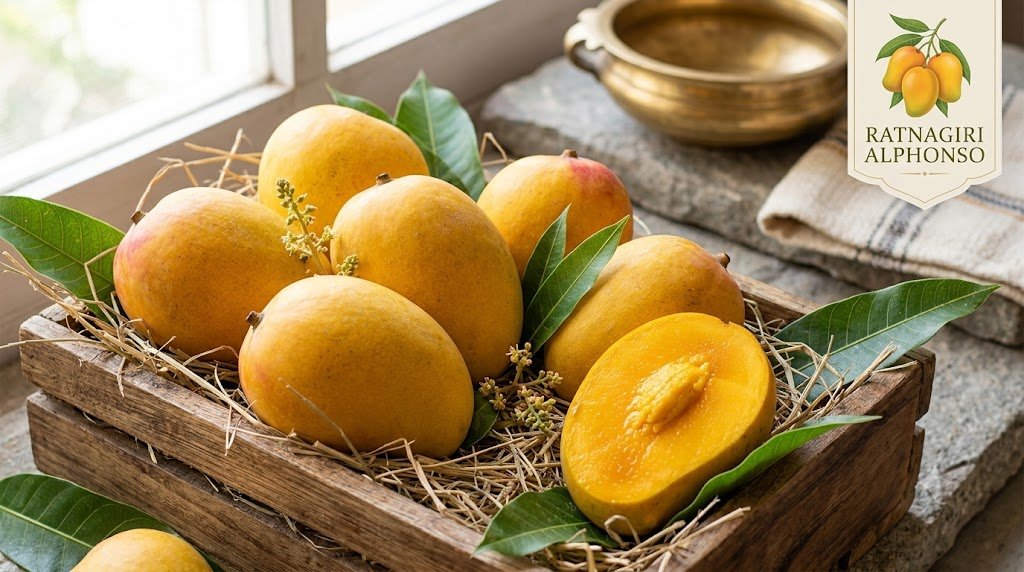
- Look for Natural Ripening Proof: Trustworthy sellers harvest the crop green and allow it to mature gradually using natural grass bedding. A naturally ripened Hapus displays a gorgeous gradient of green and gold with a distinct, deeply penetrating aroma.
- Utilize Pre-Order Windows: Instead of waiting until the middle of summer when prices fluctuate wildly, consider booking via early pre-order programs directly managed by farm networks.
Frequently Asked Questions (FAQs)
Q1: Why is the price of authentic Alphonso mangoes rising every year?
Alphonso trees are highly sensitive to weather variations. Late rains and warmer winter periods cause the delicate blossoms to fall prematurely, resulting in lower yields. Combined with rising transportation, labor, and eco-friendly packaging costs, the market price reflects this limited supply.
Q2: How can I identify a chemically ripened mango?
Chemically ripened mangoes (using Calcium Carbide) usually display a flawless, bright lemon-yellow color, but they lack the signature sweet aroma of a true Hapus. When sliced, the pulp is often unevenly colored, pale, and may have a metallic or sour aftertaste.
Q3: What does a GI tag actually guarantee?
A GI (Geographical Indication) tag acts as a legal stamp of origin. It guarantees that the fruit was grown within the specific coastal zones of Maharashtra using traditional methods, ensuring the authentic taste, rich saffron pulp, and completely fiberless texture unique to that terroir.